I have been both dreading and looking forward to this project all semester…
Form
I Started by looking at types of form, ways we communicate with form.
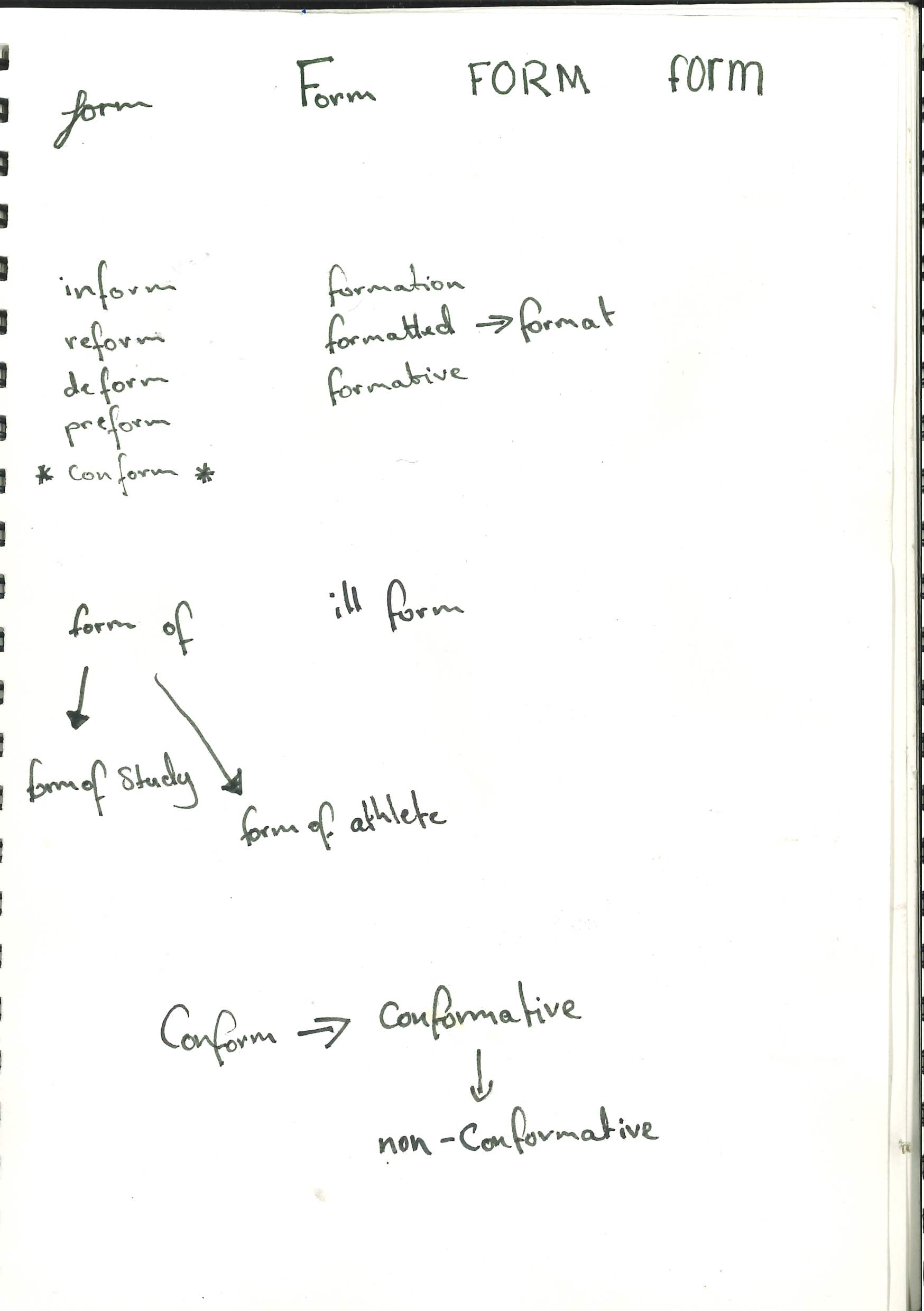
This was a really helpful exercise to try get away from the obvious, this first things that pop into your head when you think of form.
I had a couple takeaways from this, One, I wanted my piece to lie somewhere between having a physical form but also being non physical in reality. Secondly, I wanted the viewer to inform the piece, this would create interaction. However, I really didn’t want it to be gimmicky, I want it to be almost imperceivable that the viewer is a part of the work.
Regarding my first point I was inspired by the works of Laposky and Jerobeam, two digital media artists who used oscilloscopes to create their work.
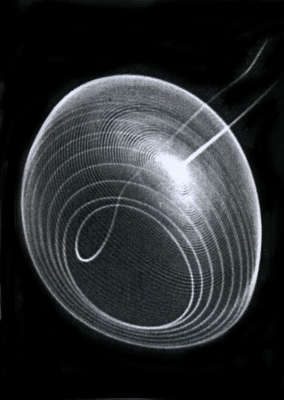
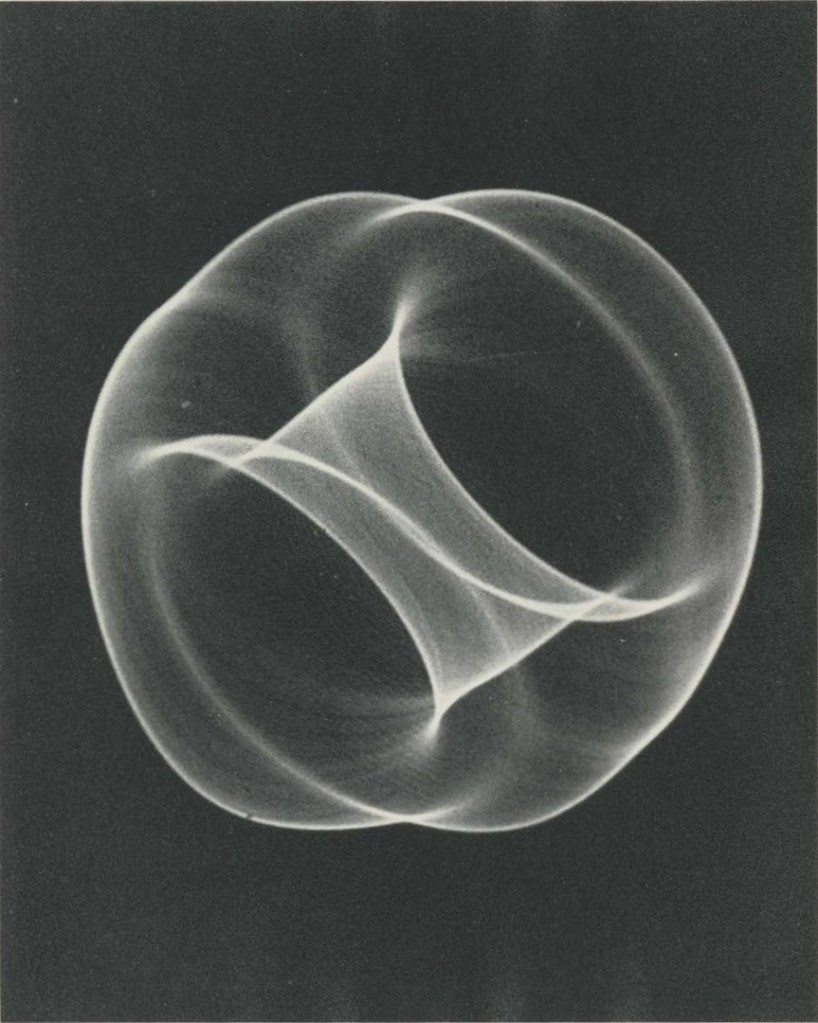
Ben F. Laposky 1952
Oscillon No. 40
Oscillon No. 27
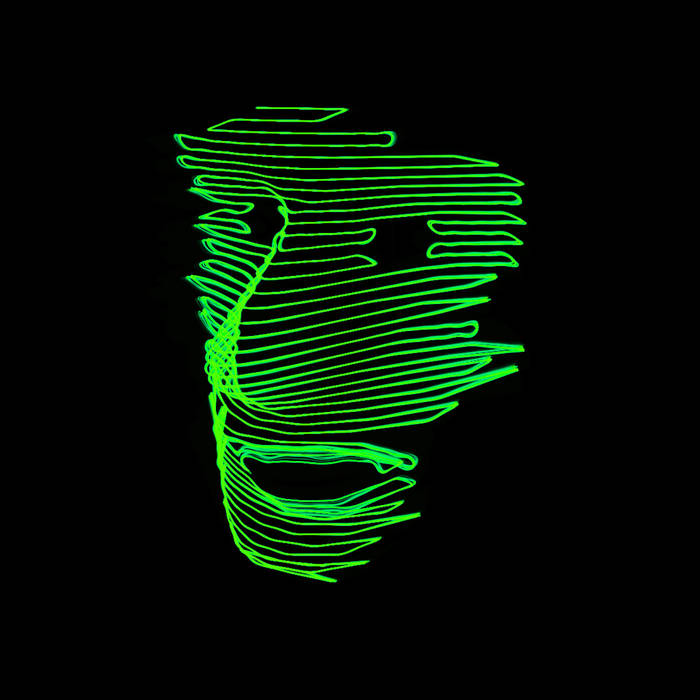
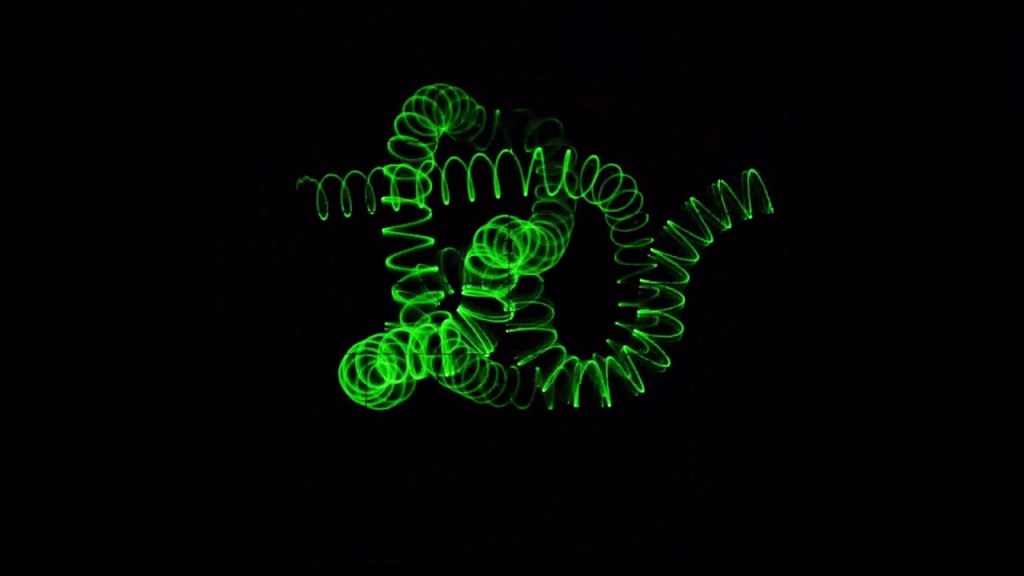
Jerobeam Fenderson 2016
Ossiliscope Music
I really liked their work, however, I really struggle with the idea of being shackled to the format of an oscilloscope. The size of the display, the context of the device, to me it didn’t make sense and seemed very restrictive. But the simplicity of the work was really lovely and I felt I could Implement my second point on the viewer informing the work very easily with such a clean canvas.
To achieve the simplicity of the oscilloscope display without being stuck within the format I began to think of ways of recreating it on a bigger scale. I then remembered I had a few laser diodes laying around and thought if I could use them to create some primitive or abstract shapes.
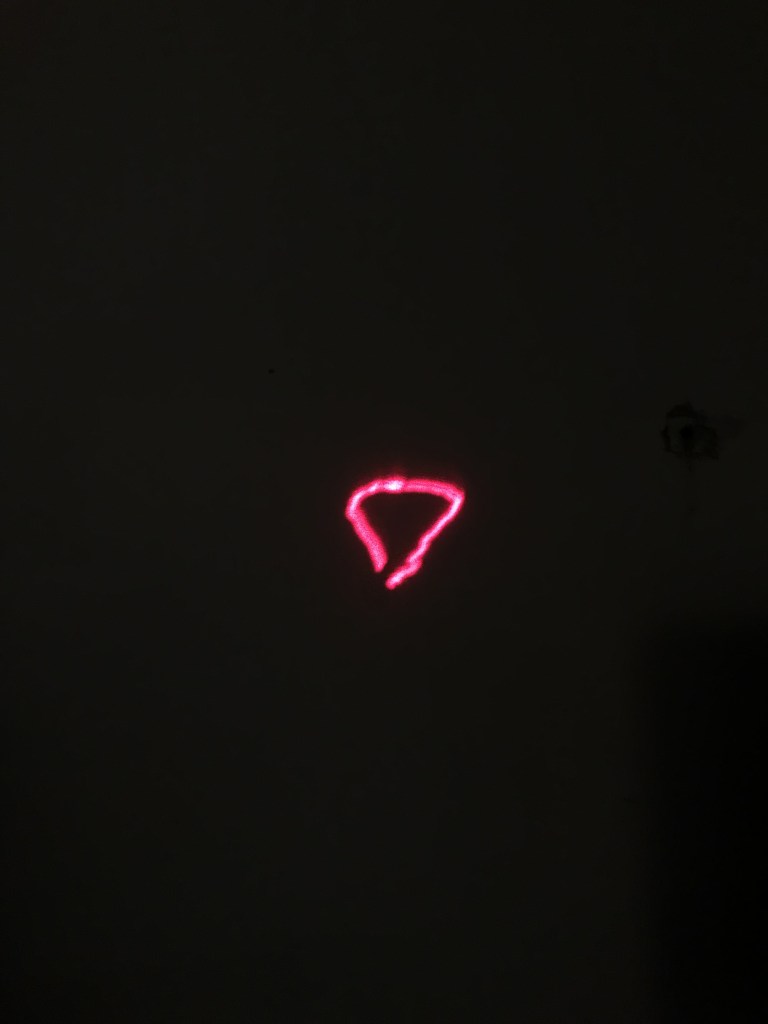
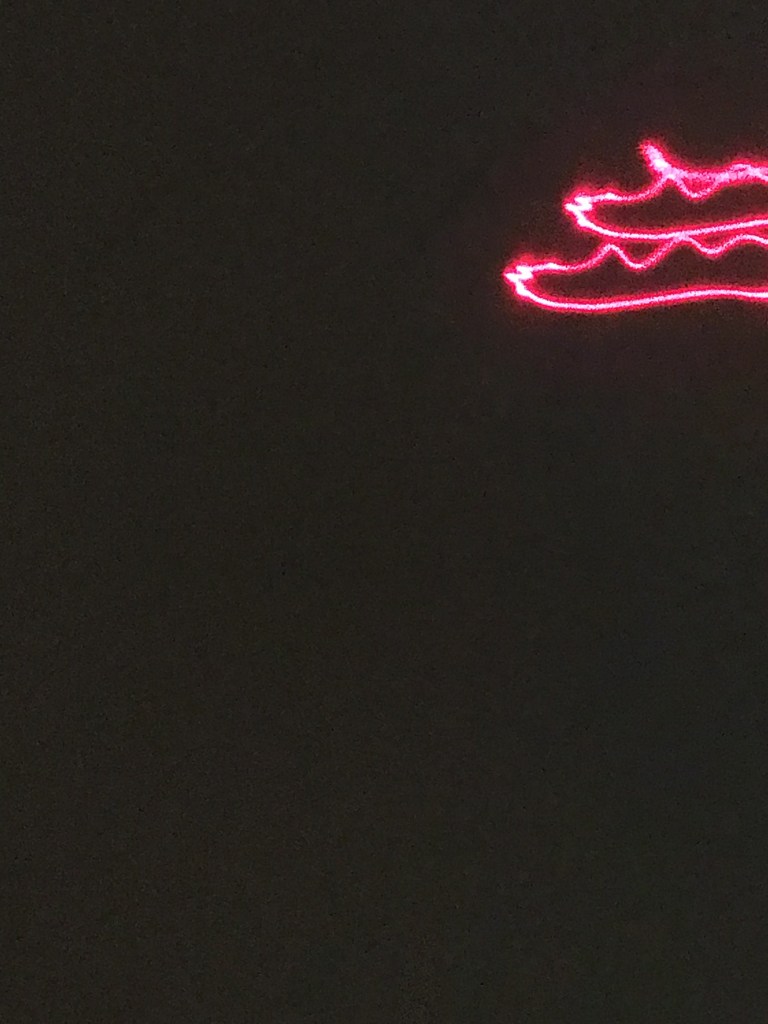
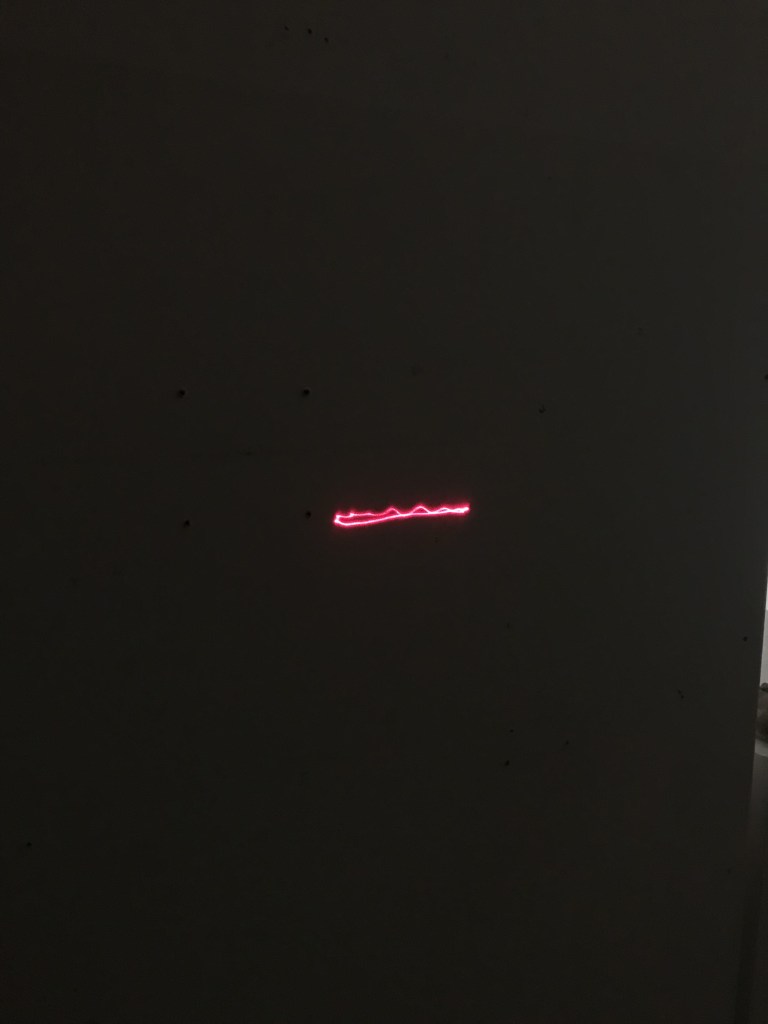
I started by simply attaching the laser to the cone of an old speaker I had and driving it with an amp in the studio. I was experimenting to see if I could in any way visualise the waveform of the sound by just playing a simple low frequency sine wave.

Content Warning: HEADPHONE USERS BEWARE
This was really exciting to see however I was disappointed with the amount of control over the shape that I had. This was very much due in part to my shoddy hot glue work. However I knew that I wanted to be able to manipulate the laser with much more precision. But this experiment proved that I could create shapes with a similar feeling to work produced on an oscilloscope.
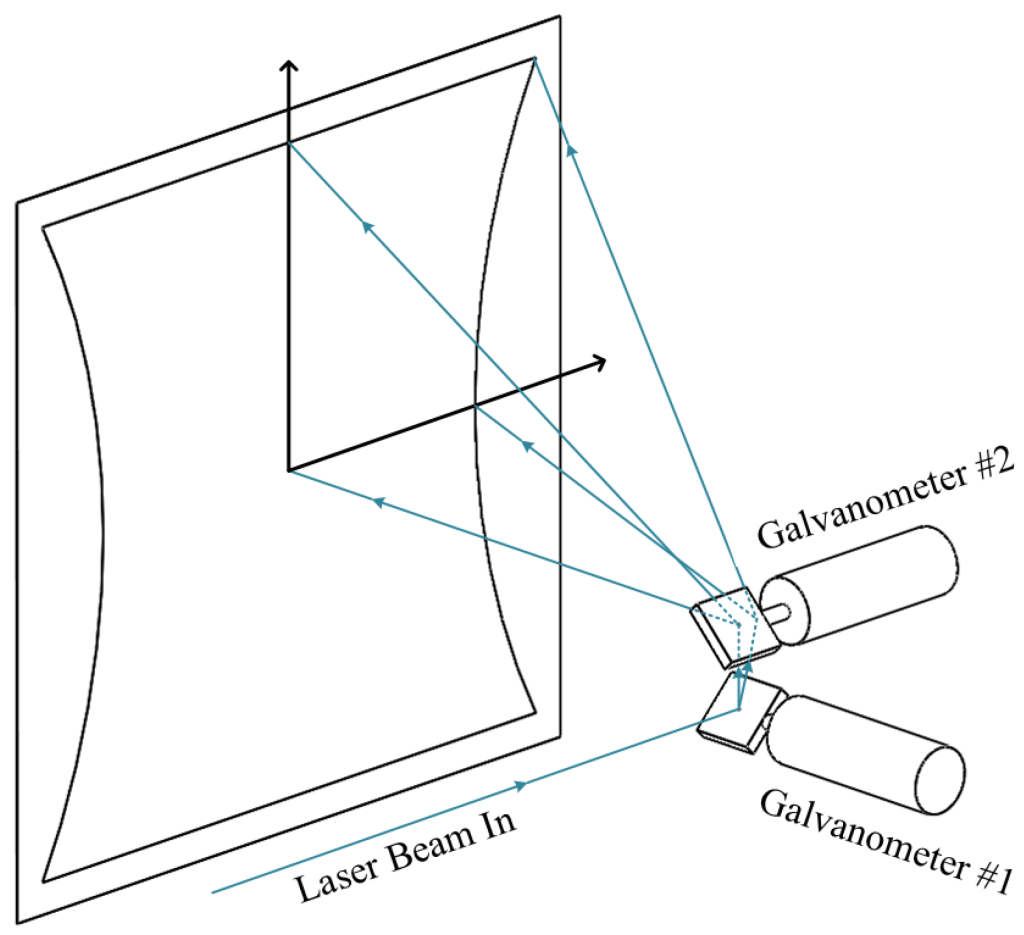
I started to research ways of control the direction of a laser and how its done practical physics. In these much more industrial and scientific settings they often use a Galvanometer.
I then began to work on creating a prototype with an arduino, and some 28BYJ-48 stepper motors.
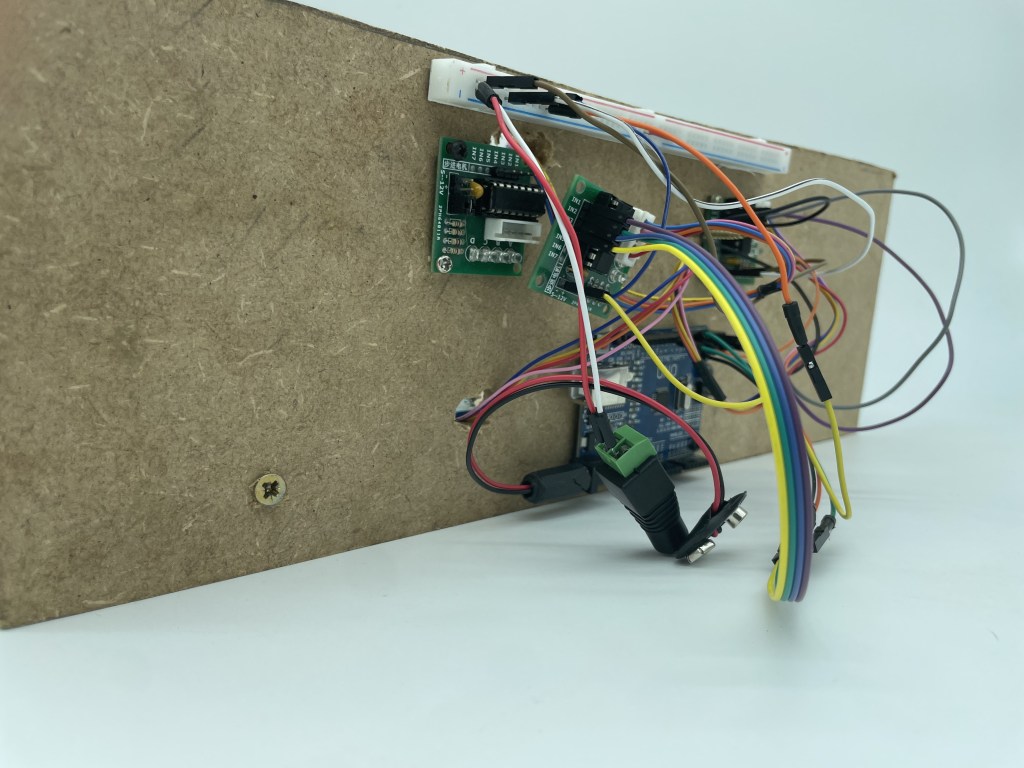
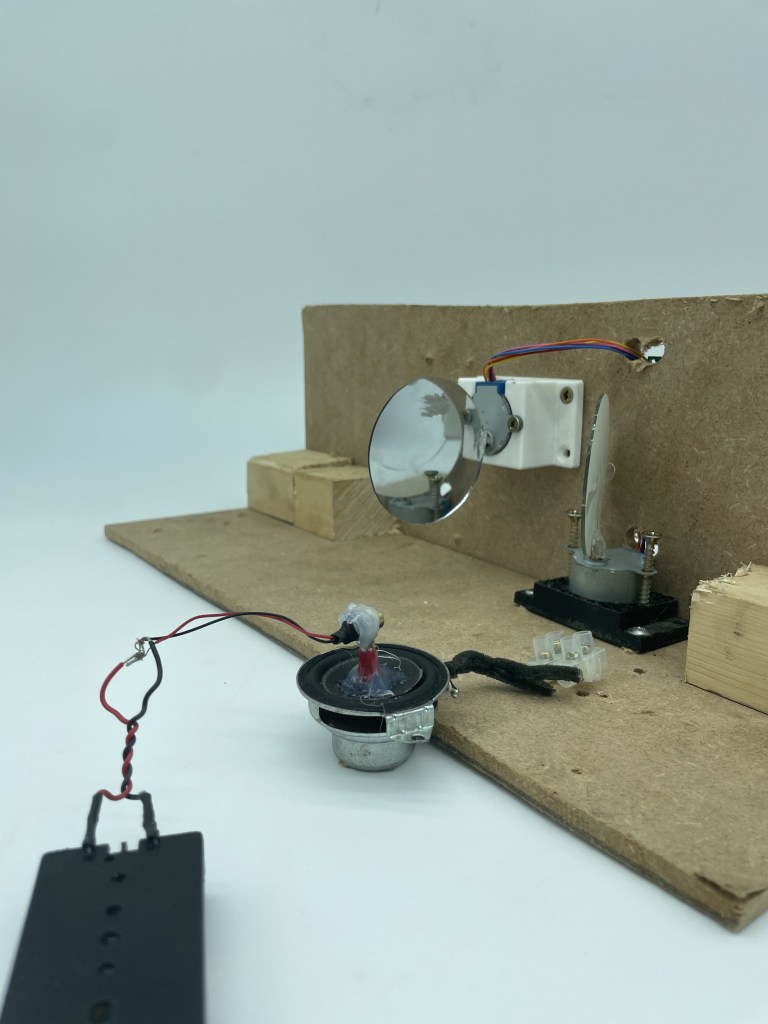
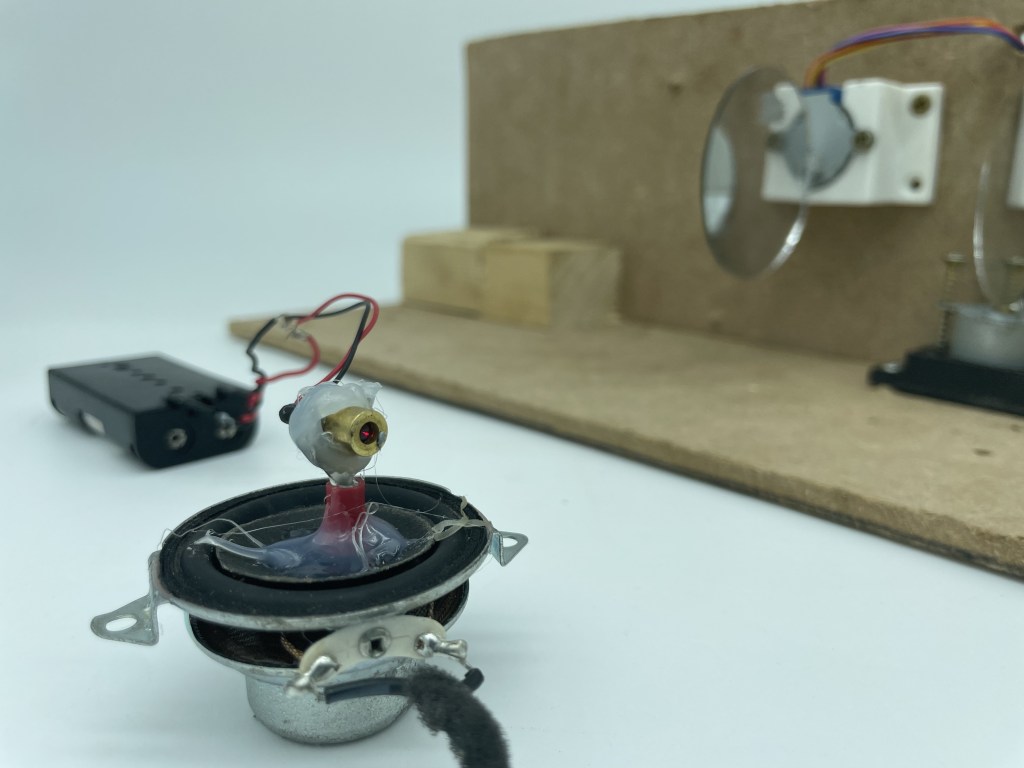
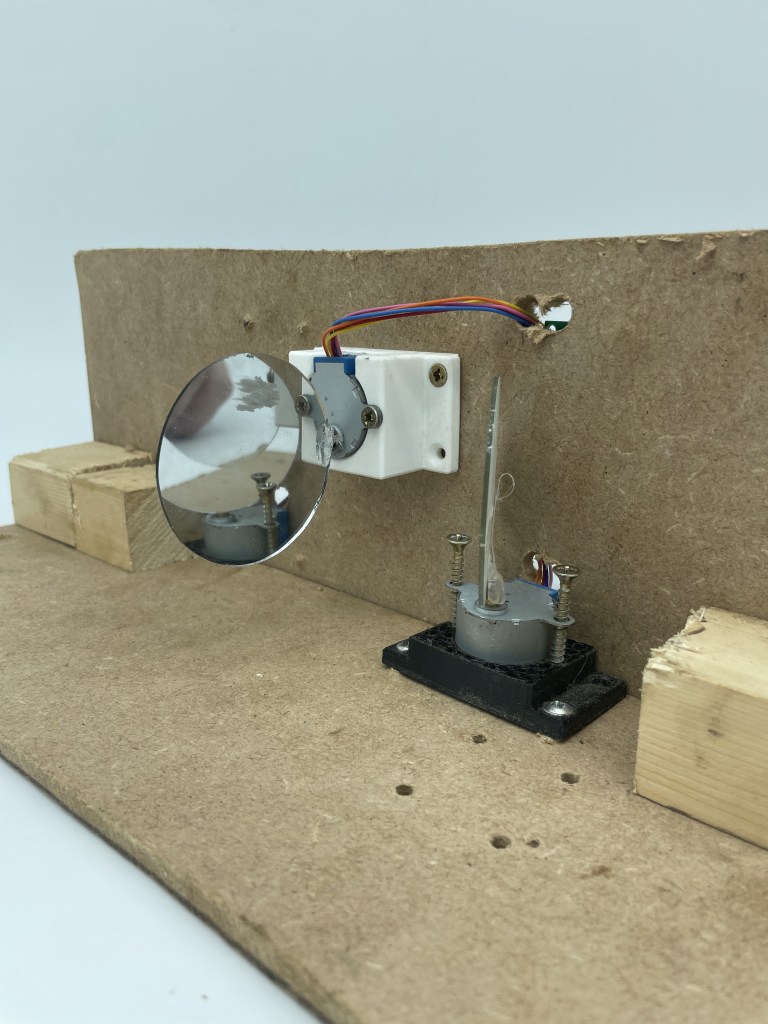
This worked and I could now control the the X and Y position of the laser against my projection surface. However these are slow and not inaccurate motors. I needed something a lot faster and more accurate.
So I dug out an old CNC shield from an old 3D printer and some corresponding Nema17 motors.
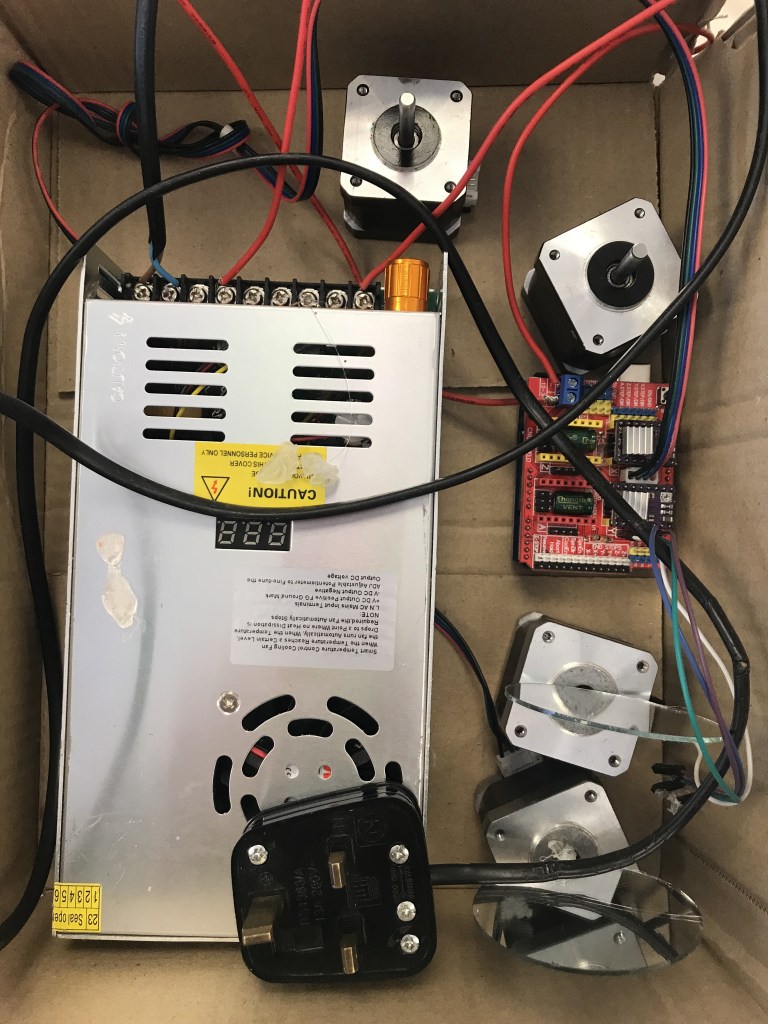
From here I have experimented somewhat in how the device will work but there is alot of work to do…
INfrom
To go back to the two main points I want to focus on the second. I want the viewer to Inform the work, but not in a gimmicky way like using a microphone or tracking thier movement to draw corresponding shapes etc.
I want each person to see something completely unique. To do this only one person will be able to see the work at a time. In other departments they might just put a sign up or have someone making sure only one person can go into the space to view at a time. However, since we are IxD students…
I intend to use a Kinect to detect the number of people in the space, if that number goes above one: turn off the laser.
There will be a cool down period as well so if viewer B enters whilst A is observing, it will stop. Viewer B has not seen anything yet, A leaves but, it is not till some time (10 seconds? not sure?) later that the Laser is turned back on displaying a completely new randomly generated shape.
Proposal
You can view my Proposal here:
 LEARNING JOURNAL