At first I was excited for this project to challenge myself and work with big data, however I soon realised that bigger is not always better…
As I think most of us did, I spent far too long trolling through the internet for the biggest, the best, the most interesting and unusual data and of course there is just too much.
Between the time of stressing over what data I wanted to use I experimented with some of the examples from workshops, especially the 3D ones with globe mapping.
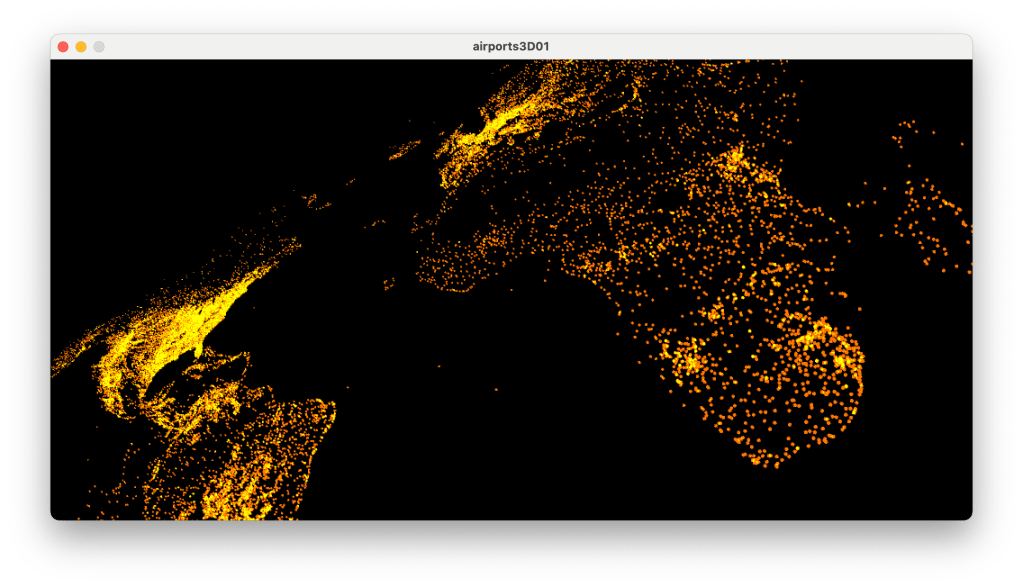

These were really fun to mess around with and of course there are so many ideas that come to mind when thinking about mapping data on the earth or with geolocation how ever I wanted to expand further than the examples from the workshop.
One off shoot of this project was working with a midi keyboard in the studio, to create my own data set. From the keyboard I get two pieces of data: the key played and the velocity it’s played with. I wrote a program with processing initially that read in this data and and simply displayed arbitrary shapes with colour and size being derived from the key and velocity it’s played with. This was really interesting to work with however it didn’t exactly fit the brief of reading in data from files. This caused me to re-evaluate and so I wrote a program that read in the data from the keyboard as I played and wrote it into a file. From here I could have a separate program read in this data and use it to create something.
I really liked the idea of one, making my own data and two, visualising sound and music in an unintuitive way. However I really struggled to get inspiration for how I’d work with the data and hit a bit of a creative road block. This is something I would really like REVISIT!
Moving on, I went back to looking for data again with the mind set of bigger is better. Eventually I found this enormous data set where people had been surveyed to pick songs that they feel fit a certain emotion. There were over 80 emotions to choose from such as: fun, happy and sad. But it also contains much more ambiguous emotions such as: elegant, nocturnal and spontaneous. All of this data was contained across multiple CSV files linked by a key like a database. This meant there was a lot of work to combine the data to be able to work with the emotions and the song names and artist etc. However because we are not bound by excel I was able to do what would laborious time consuming work in processing and read in all the different files and link them together.
I wanted to be able to explore the emotions and find new music that has been picked by humans. I hate that Spotify thinks it knows me or what I want to listen to, it can often -as with a lot of AIs- be too smart. I know I could use private sessions and remove certain things from my “taste profile” but that sounds like a lot of work. So the idea that I have essentially 80 different moods to pick from and thousands of people’s opinions giving me suggestions is real. It makes me interested in the outcome and want to listen to something. Its like having thousands of friends suggesting songs but condensed down to and easy format. And you don’t have be polite and listen to them.
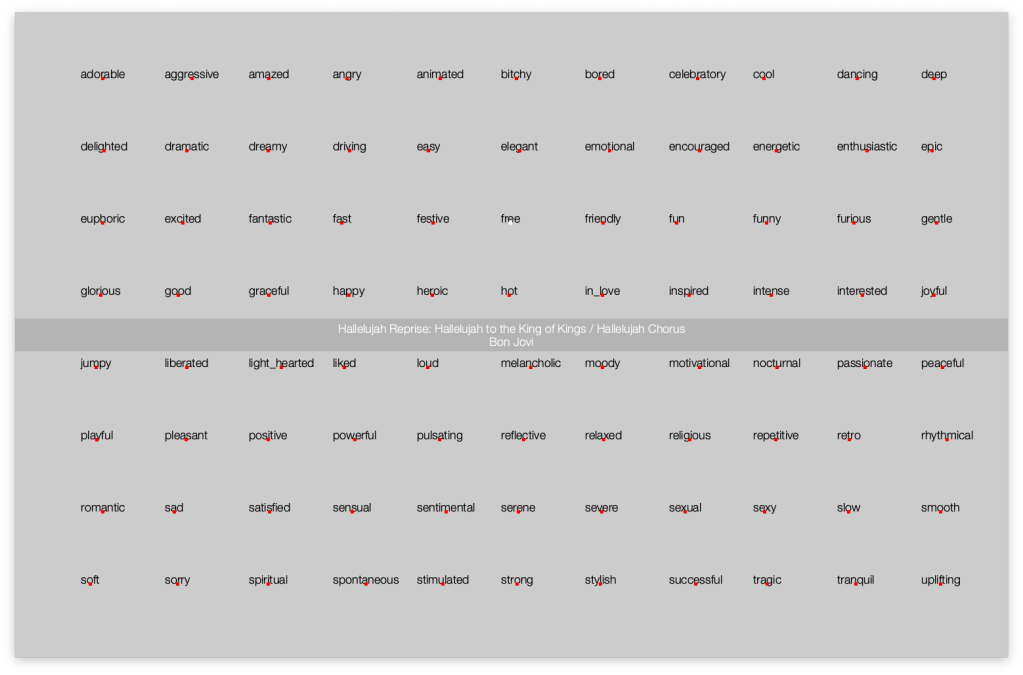
This is the working program with all the moods laid out in a grid and in the centre you can see a scrolling bar of the recommended song. You can hover over any of the moods and the bar will begin to display songs of that chosen mood.
Aesthetically its pretty rough, however I sort of like the simplicity and the colour scheme was inspired by the classic Casio Keyboard grey…
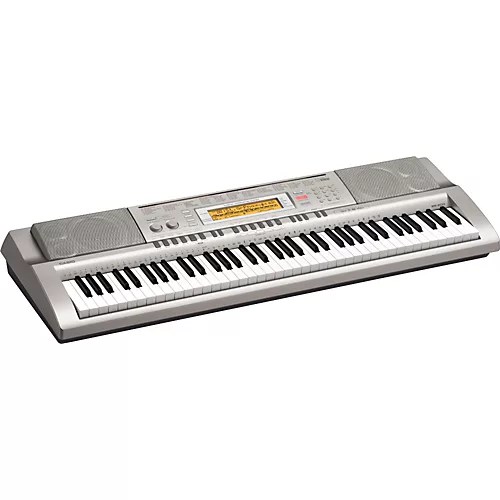
Something about the way the program works being not made up of AI and so the fact that it really is just people thoughts I felt seems so old fashioned now and so I wanted to reflect that idea in the design and chose to mimic the classic Casio Grey with its very angular boxy design style.
CONCLUDING
Over all I really like this project in theory, I like working with data and the freedom of outcomes is very exciting however I regret spending so much time trying to find “the perfect dataset”. I wish I had been more creative, say gone with the Midi data idea. I will definitely explore that in the future!
 LEARNING JOURNAL